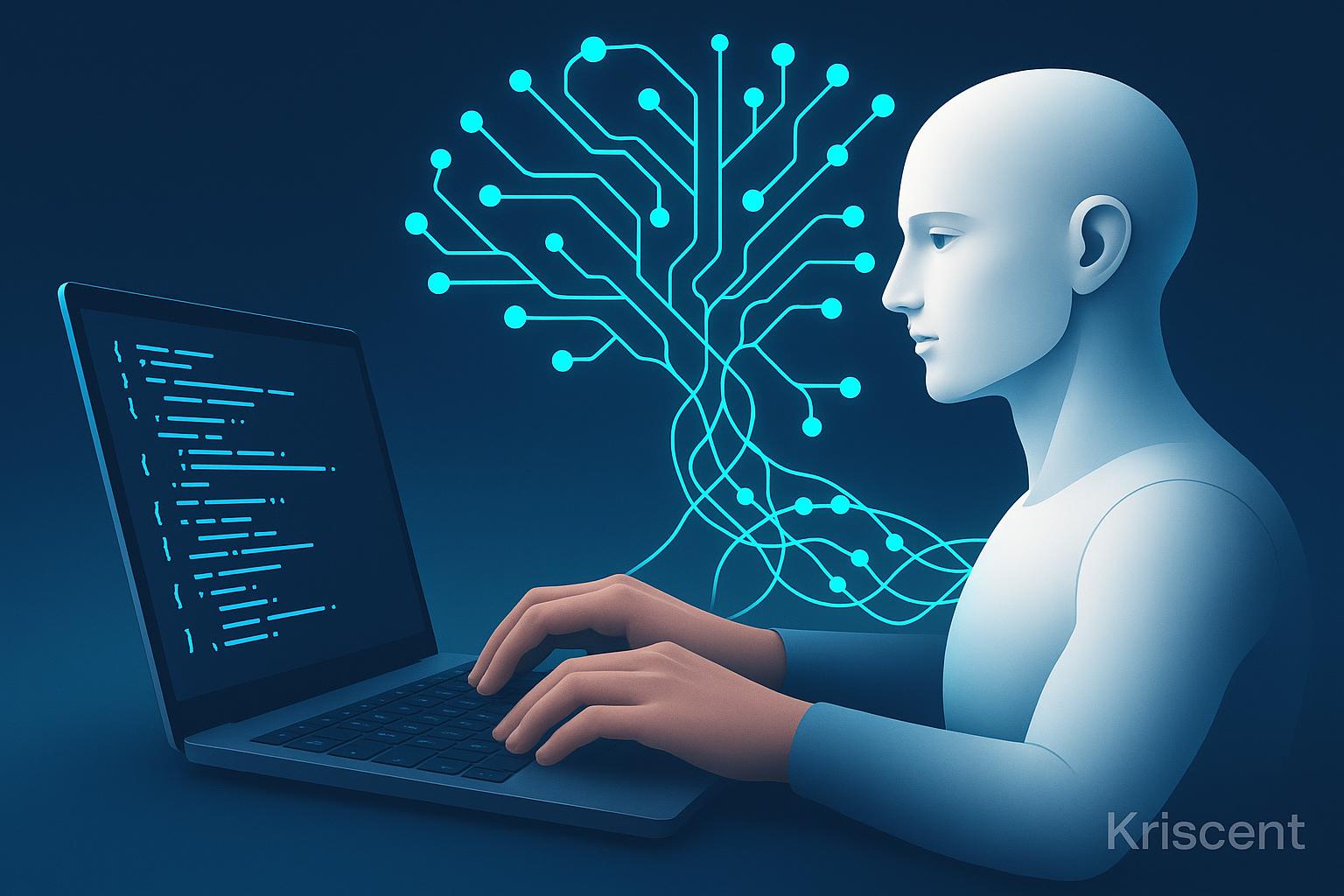
Hook: Why AI’s Reliability in Software Engineering Is Both a Promise and a Puzzle
Artificial intelligence is revolutionizing software engineering with unprecedented speed and efficiency. Yet, as Bain’s latest insights reveal, this surge reveals a fundamental reliability paradox: AI boosts productivity but also introduces new risks in software quality assurance and system dependability. This article explores this paradox, how to navigate it, and how Kriscent Techno Hub leverages AI responsibly to deliver robust software solutions in 2026.
The Reliability Paradox in AI-Driven Software Engineering
AI’s integration into software engineering workflows has surged, with over 70% of tech firms adopting AI-assisted coding tools by 2025. While AI accelerates development phases, Bain’s research highlights an unsettling pattern: increased AI reliance sometimes leads to unforeseen bugs, unpredictable system behaviors, and challenges in maintaining software integrity. This is the core of the ‘reliability paradox’ — AI improves speed but complicates trust.
Software engineers face a dilemma; how to harness AI’s power without compromising code quality and reliability. For a global IT company like Kriscent, this means investing deeply in both AI innovation and rigorous human oversight.
How AI Transforms Software Development Lifecycles
AI impacts several phases of the software lifecycle, notably:
- Code Generation: AI tools like GPT-powered coding assistants generate large codebases rapidly.
- Automated Testing: AI-driven testing frameworks detect issues faster than traditional QA methods.
- Predictive Maintenance: AI predicts bugs or system failures before deployment.
Despite these advances, Bain warns about AI models’ occasional lack of contextual reasoning causing vulnerabilities.
Comparison Table: Traditional vs AI-Driven Software Engineering
| Aspect | Traditional Approach | AI-Driven Approach |
|---|---|---|
| Development Speed | Moderate | Fast, automated code generation |
| Bug Detection | Manual, slower | Automated, real-time analysis |
| Reliability | High with thorough testing | Variable; depends on training data quality |
| Human Oversight | Central | Essential but sometimes minimal |
Cracking the Reliability Paradox: Strategies for Risk Mitigation
Addressing the reliability paradox requires a multi-pronged approach.
- Step 1: Enhance AI Training Data Quality – Use diverse, high-quality datasets to minimize biases and errors.
- Step 2: Hybrid Human-AI Review Systems – Combine AI speed with expert human judgment to ensure code robustness.
- Step 3: Continuous Monitoring and Feedback – Implement real-time monitoring tools that catch AI-generated inconsistencies post-deployment.
- Step 4: Adopt AI Explainability Techniques – Use interpretable AI models to understand decision pathways, building trust.
- Step 5: Invest in Developer Training and Awareness – Upskill engineers in AI best practices and reliability testing.
Kriscent Techno Hub exemplifies this approach by integrating AI into our software solutions while adhering to ISO 9001 and ISO 27001 standards, ensuring compliance and quality at every stage.
Real-World Examples: AI Reliability Challenges & Solutions
Case Study 1: A UK financial services client used AI to accelerate application development but faced intermittent bugs in regulatory compliance modules. Kriscent deployed hybrid human-AI audits combined with AI explainability tools, resolving issues before final release.
Case Study 2: A UAE-based retail platform leveraged AI-driven predictive maintenance to reduce downtime by 30%, but early models missed rare edge-case failures. Incorporating continuous feedback loops improved AI detection accuracy dramatically.
Future Outlook: AI, Reliability, and the Kriscent Vision
AI’s role in software engineering will deepen, making it essential to resolve the reliability paradox sustainably. Emerging frameworks like the AI Fluency Framework (2025) and new standards for AI assurance will guide this transition.
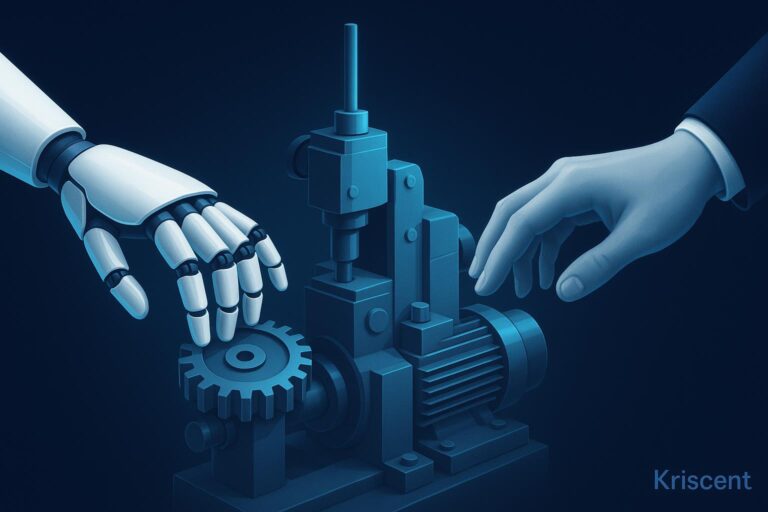
At Kriscent Techno Hub, we envision AI as a collaborative force, not a replacement — where human expertise enhances AI’s cadence and dependability. This philosophy drives our AI-powered software development and consulting offerings across India, UAE, UK, and Ireland.
FAQ: Navigating AI Reliability in Software Engineering
What is the AI reliability paradox?
It’s the challenge where AI accelerates software development but sometimes undermines reliability due to AI limitations and data biases.
How can companies mitigate AI reliability risks?
Through rigorous training data management, hybrid human-AI workflows, continuous monitoring, and adherence to quality standards.
Why is human oversight still crucial?
Because AI models can misinterpret context; expert engineers ensure software integrity and compliance.
How does Kriscent address the reliability paradox?
By combining certified quality management systems, AI innovation, and human expertise for dependable, secure solutions.
What’s the future of AI in software engineering?
Greater integration with explainable AI, improved standards, and enhanced collaboration between AI tools and developers.
Explore how Kriscent Techno Hub’s AI-powered software development and consulting can safeguard your next project’s reliability and innovation. Contact us to learn more.