Hook: Why AI is the Missing Link for German Heavy Industry
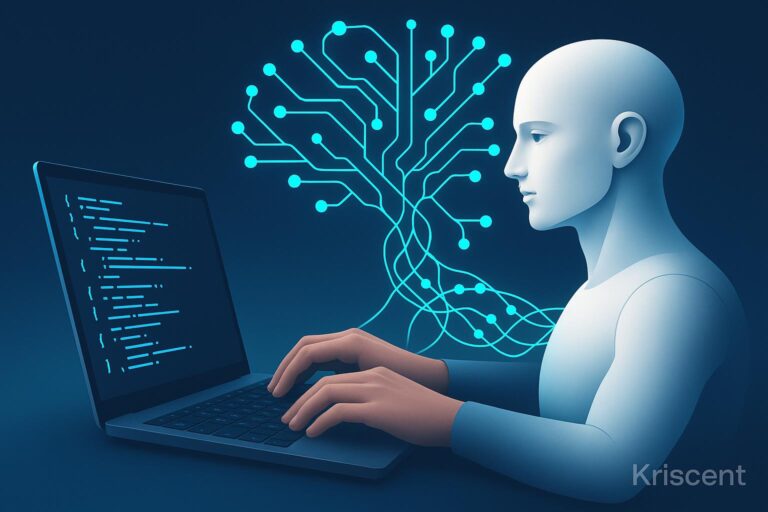
German heavy industry stands at a critical crossroads. Despite its global reputation for engineering excellence, the sector faces mounting pressure to modernize amid fast-evolving digital technologies. Nvidia CEO Jensen Huang’s recent call for German manufacturers to adopt AI underscores a bold yet urgent opportunity: harnessing artificial intelligence not to replace traditional manufacturing but to elevate it to unprecedented levels of efficiency and innovation. This post dives deep into why AI adoption is no longer optional but essential for the future of heavy industry, what the barriers are, and how companies like Kriscent Techno Hub enable this transformation.
The AI Opportunity in Heavy Industry: Beyond Digital Disruption
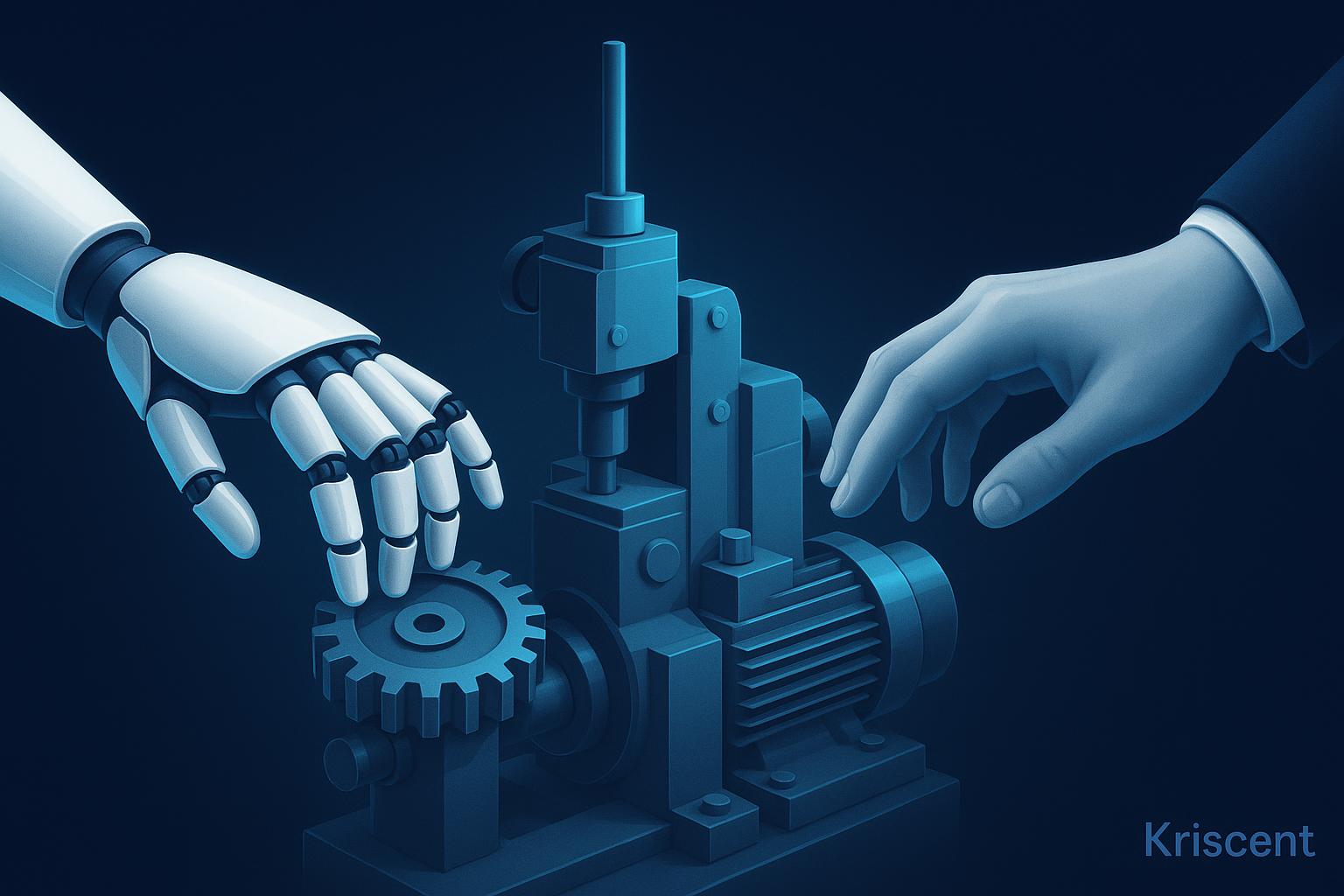
Artificial intelligence has often been viewed as a replacement technology, threatening to render manual processes obsolete. However, Nvidia’s leadership emphasizes AI as a digital enabler — a complementary force that enhances heavy industry’s strengths in manufacturing, materials processing, and engineering precision. According to the 2025 World Economic Forum report, AI-driven industrial automation could increase manufacturing productivity by up to 40%, reduce downtime through predictive maintenance by 30%, and improve supply chain efficiency by 25% globally.
In Germany, where the industrial output accounts for over 23% of GDP, investing in AI integration is crucial to maintaining competitive advantage amid global rivals increasingly embracing smart manufacturing.
Current Barriers to AI Implementation in German Manufacturing
Despite clear benefits, several impediments slow AI adoption in traditional heavy industry sectors:
- Legacy Systems: Many manufacturing plants still operate on outdated IT infrastructure incompatible with advanced AI algorithms.
- Workforce Skill Gaps: Engineers and operators often lack AI literacy or data analysis skills necessary for smooth AI integration.
- Cultural Resistance: Concerns about job displacement and distrust of automated decision-making slow down organizational readiness.
- Data Silos: Fragmented data across machinery and business units limit the training of robust AI models.
Kriscent Techno Hub’s project teams specialize in overcoming such obstacles through tailored AI consultancy, infrastructure modernization, and workforce upskilling programs that align with ISO 9001 and ISO 27001 best practices.
How Kriscent Techno Hub Enables AI-Driven Industry 4.0 Solutions
Leveraging its CMMI Level 3-certified software development and AI expertise, Kriscent Techno Hub deploys comprehensive AI solutions crafted for heavy industry scenarios. Their approach includes:
- Assessment & Strategy: Evaluating existing industrial data ecosystems and digital maturity.
- Infrastructure Integration: Designing AI-ready cloud architectures with secure data pipelines conforming to GDPR and international standards.
- Custom AI Applications: Creating predictive maintenance models, quality control AI, and intelligent supply chain planning tools.
- Training & Change Management: Empowering workforce through AI upskilling workshops and continuous support.
- Performance Monitoring: Using AI dashboards and IoT device integration for real-time insights and automation tuning.
This phased strategy ensures scalable, transparent AI adoption that complements existing industrial workflows rather than disrupts them.
Step-by-Step Guide: Deploying AI in Heavy Industry Manufacturing
For German manufacturers inspired by Nvidia’s call, here is a clear roadmap Kriscent recommends:
- Step 1: Identify Pain Points — Map workflows to pinpoint inefficiencies like machine downtime or supply delays.
- Step 2: Collect & Consolidate Data — Break down data silos leveraging IoT sensors and cloud aggregation.
- Step 3: Pilot AI Models — Deploy predictive analytics or anomaly detection on a small scale.
- Step 4: Evaluate & Iterate — Use KPIs and feedback loops to fine-tune AI performance.
- Step 5: Scale Enterprise-wide — Expand AI tools with continuous training and infrastructure upgrades.
Comparison Table: Traditional vs AI-Enabled Heavy Industry Practices
| Aspect | Traditional Heavy Industry | AI-Enabled Heavy Industry |
|---|---|---|
| Maintenance | Scheduled, manual inspections | Predictive maintenance via AI sensors |
| Quality Control | Manual checks and human inspection | Real-time AI-driven defect detection |
| Supply Chain | Static, reactive logistics planning | Dynamic AI-optimized supply chains |
| Workforce | Manual data handling, low AI literacy | AI-augmented tasks, continuous upskilling |
| Data Management | Siloed, unstructured data | Centralized, clean data architecture |
Forward-Looking: The Future of AI and Heavy Industry Collaboration
German manufacturers stand to gain immensely by embracing Nvidia’s vision of AI as a vital augmentation rather than a replacement. From efficiency gains to enabling new product innovation cycles, AI is poised to reshape how heavy industry competes on the global stage in 2026 and beyond. Companies like Kriscent Techno Hub, with proven credentials in AI software development, infrastructure, and change management, are well-positioned to guide this digital transformation securely and profitably.
Explore Kriscent’s AI-driven industrial solutions today and future-proof your manufacturing enterprise against disruptive trends.
FAQs on AI Adoption in German Heavy Industry
Q1: Will AI replace jobs in heavy industry?
AI primarily automates repetitive tasks while augmenting human roles, leading to upskilling rather than wholesale job loss.
Q2: How long does AI integration take?
Depending on organizational readiness, phased AI adoption can show initial results within 6-12 months.
Q3: What security standards should AI implementations meet?
Industries must comply with ISO 27001, GDPR, and sector-specific cybersecurity protocols, areas where Kriscent offers expert guidance.
Q4: Can small manufacturers benefit from AI?
Yes, scalable AI solutions can be customized to fit enterprises of all sizes.
Q5: How does Kriscent support workforce transition?
Kriscent provides targeted AI literacy training and change management programs to ease adoption and boost organizational buy-in.