
Mobile app development cost in India is one of the biggest decision factors for startups, SMEs, and enterprises planning to launch a digital product in 2026. Whether you’re building a simple MVP or a feature-rich platform, understanding the real app development cost in India 2026 is critical to avoid budget overruns and poor ROI.
The truth is, there’s no fixed price. The cost to build a mobile app in India depends on multiple variables like app complexity, features, platform (Android, iOS, or cross-platform), UI/UX design, and development approach. A basic app may cost as low as ₹50,000, while a highly scalable, enterprise-grade solution can exceed ₹50,00,000+.
This guide provides a complete, no-fluff breakdown of mobile app development pricing in India, including stage-wise costs, hidden expenses, industry-specific estimates, and proven ways to reduce your development budget without compromising quality. If you’re planning to invest in app development, this breakdown will help you make a data-driven decision and maximize ROI from day one.
How Much Does Mobile App Development Cost in India in 2026?
If you’re evaluating the mobile app development cost in India in 2026, ignore generic estimates. Pricing varies based on complexity, features, and execution speed. Below is a realistic breakdown aligned with actual market rates.
| App Type | Cost Range (₹) | Timeline | Best For |
| Basic App | ₹50,000 – ₹3,00,000 | 1–2 months | MVPs, simple business apps |
| Mid-Level App | ₹3,00,000 – ₹15,00,000 | 2–6 months | Startups, scalable apps with core features |
| Advanced App | ₹15,00,000 – ₹50,00,000+ | 6–12+ months | Enterprise apps, marketplaces, fintech |
Most businesses overspend by 30–50% due to unnecessary features in the initial phase. Launching with an MVP reduces risk and speeds up market entry.
Cost Per Hour: India vs Global Comparison
- India offers 60–70% cost savings without compromising technical quality, if you choose the right app development agency.
- Low-cost freelancers (<₹500/hr) often lead to rework costs, delays, and scalability issues.
| Region | Hourly Rate (₹) |
| India | ₹800 – ₹3,500/hr |
| USA/UK | ₹5,000 – ₹15,000/hr |
| Eastern Europe | ₹3,000 – ₹8,000/hr |
Timeline vs Cost Correlation
| Development Speed | Cost Impact | Reality |
| Fast (1–2 months) | High Cost (↑20–40%) | Requires larger team, parallel development |
| Standard (3–6 months) | Balanced | Most cost-efficient |
| Slow (6+ months) | Hidden Cost ↑ | Delays = lost revenue + opportunity cost |
Cost Based on Platform Choice
| Platform Type | Cost Impact | When to Choose |
| Android Only | Lower | Budget-focused, India-first audience |
| iOS Only | Moderate | Premium users, global targeting |
| Cross-Platform | Best ROI | Faster launch + lower cost |
| Native (Both) | Highest | High-performance apps (fintech, gaming) |
What This Means for Your Business
- If your budget is under ₹3L, focus strictly on MVP.
- Between ₹5L–₹15L, you can build a scalable product with real market potential.
- Above ₹20L, you’re entering serious product territory, execution quality matters more than cost.
Key Factors That Affect Mobile App Development Cost in India (2026)
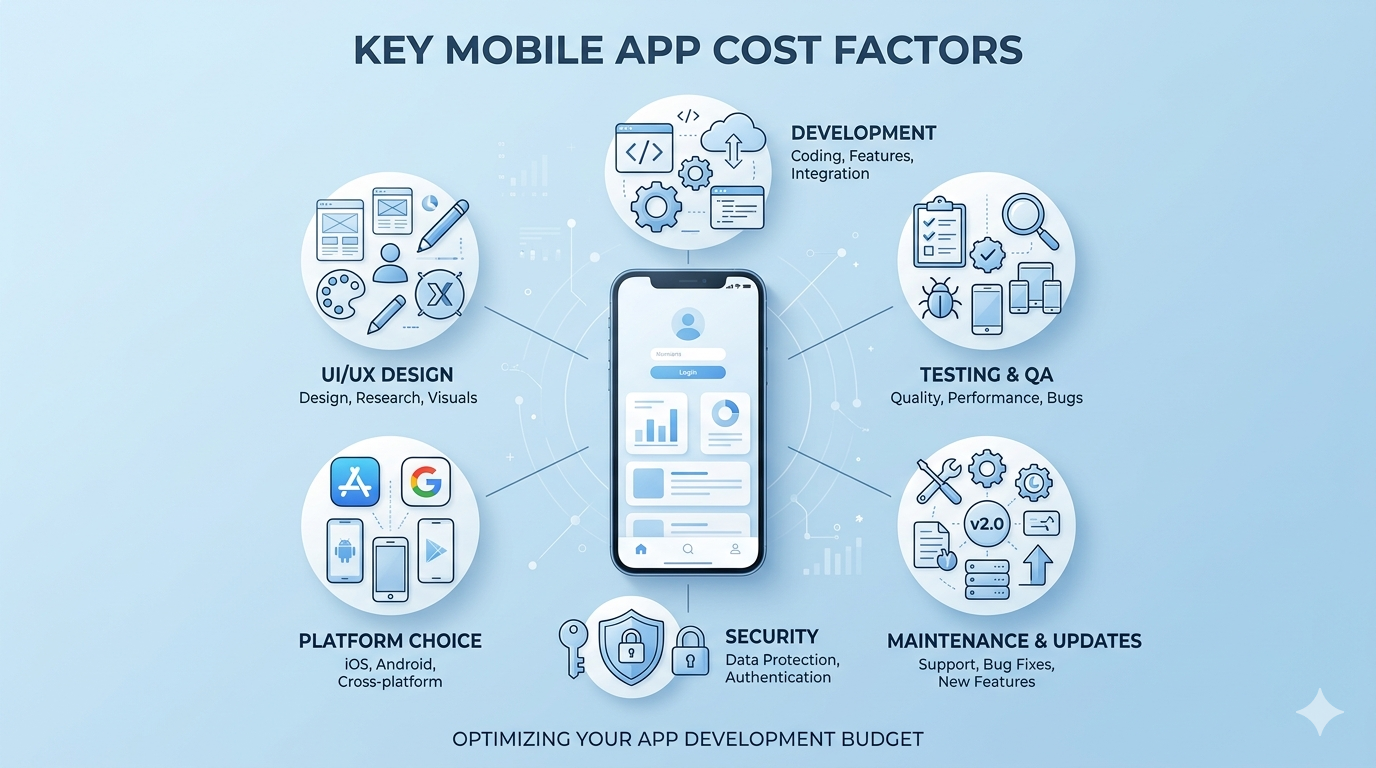
Most businesses miscalculate mobile app development cost in India because they focus only on “total price” instead of cost drivers. The real leverage comes from controlling these variables.
App Complexity (Primary Cost Driver)
| Complexity Level | Cost Impact | What’s Included |
| Simple App | Low | Static pages, basic forms, no backend |
| Moderate App | Medium | Login, dashboard, APIs, payments |
| Complex App | High | Real-time features, AI, chat, scalability |
Every additional feature compounds cost, not linearly, but exponentially. A chat system alone can increase budget by ₹2L–₹8L depending on scale.
Platform Choice (Android, iOS, Cross-Platform)
- Single Platform (Android or iOS)
- Lower initial cost
- Limited audience reach
- Cross-Platform (Flutter/React Native)
- 30–40% cost savings
- Faster time-to-market
- Native (Separate Android + iOS)
- Highest cost
- Best performance and scalability
If you’re validating an idea, cross-platform gives maximum ROI. Native only makes sense when performance is mission-critical.
UI/UX Design Complexity
- Basic UI (Templates) – ₹30K – ₹1L
- Custom UI (Brand-focused) – ₹1L – ₹5L
- Advanced UI (Animations, micro-interactions) – ₹5L+
Cheap UI kills conversion. Poor UX increases churn, making your acquisition cost useless.
Features & Functionalities
Cost scales directly with features:
| Feature | Cost Impact |
| User Login/Auth | Low |
| Payment Gateway | Medium |
| Real-Time Chat | High |
| Push Notifications | Low |
| AI/ML Features | Very High |
| GPS/Tracking | Medium |
80% of app success comes from 20% of features. Overbuilding early-stage apps is the fastest way to burn capital.
Backend Infrastructure
- Basic Backend (Firebase, Supabase) → Low cost
- Custom Backend (Node.js, Django) → Medium cost
- Scalable Cloud Architecture (AWS, GCP) → High cost
Cost Impact: ₹50K – ₹10L+
Ignoring backend scalability leads to expensive rebuilds later.
Third-Party Integrations
Common integrations:
- Payment gateways (Razorpay, Stripe)
- Maps (Google Maps API)
- SMS/OTP services
- Analytics tools
Cost Impact:
- Initial integration: ₹10K – ₹2L
- Ongoing costs: API usage fees
Mistake: Many businesses ignore recurring API costs, these directly affect long-term profitability.
Development Team Type
| Option | Cost | Risk | Best For |
| Freelancers | Low | High | Very small projects |
| Agency | Medium | Low | Most businesses |
| In-House Team | Very High | Medium | Large-scale companies |
Cheap developers often lead to technical debt, which costs 2–3x more to fix later.
App Security Requirements
- Basic security → Low cost
- Advanced encryption, compliance (fintech, healthcare) → High cost
Impact: ₹50K – ₹5L+
Reality: Security is not optional. One breach = reputation damage + financial loss.
Testing & Quality Assurance
- Manual testing → Lower cost
- Automated testing → Higher upfront cost, lower long-term cost
Cost Impact: 10–20% of total budget
Insight: Skipping QA is the fastest way to destroy user retention.
Maintenance & Post-Launch Costs
- Bug fixes
- Updates
- Server maintenance
- Feature upgrades
Annual Cost: 15–25% of initial development cost
Mistake: Most businesses budget only for development, not for survival post-launch.
Mobile App Development Cost Control Strategy
- Reduce cost by cutting unnecessary features, not quality
- Start with MVP → Validate → Scale
- Choose execution partner carefully (money burner)
Mobile App Development Cost Breakdown (Stage-wise)
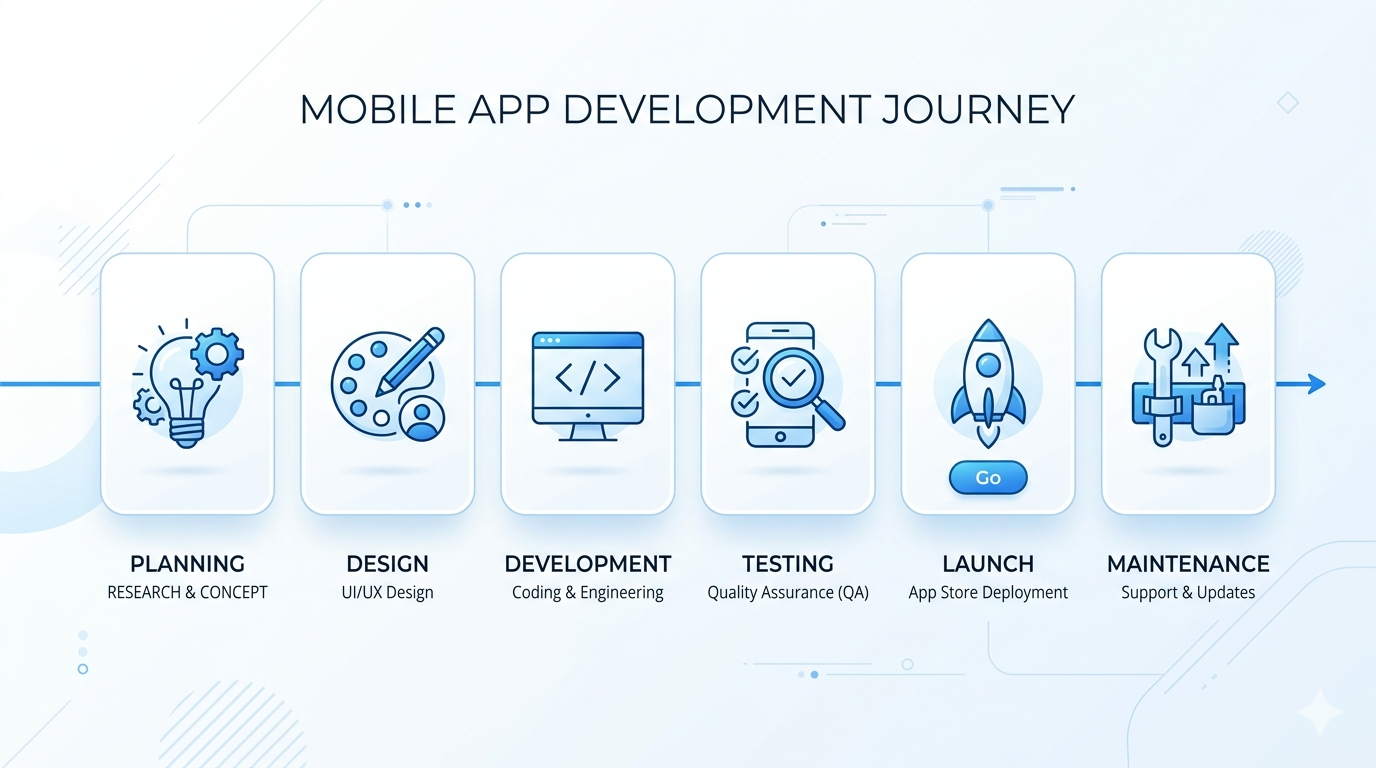
Most cost overruns happen because businesses don’t understand where the money is actually spent. Breaking down the mobile app development cost in India by stages gives you control over budget, timelines, and ROI.
› Planning & Research Cost (Discovery Phase)
- Cost Range: ₹20,000 – ₹1,00,000
- Timeline: 1–3 weeks
What’s Included:
- Business requirement analysis
- Market & competitor research
- Feature prioritization (MVP scope)
- Technical feasibility planning
Skipping this stage leads to unclear scope, constant changes, and 20–30% budget escalation later.
› UI/UX Design Cost
Cost Range: ₹50,000 – ₹3,00,000
Timeline: 2–4 weeks
What’s Included:
- Wireframes (app structure)
- UI design (visual screens)
- User journey optimization
- Prototyping (clickable demo)
Cost Drivers:
- Number of screens
- Custom animations
- Branding requirements
A well-designed UI directly impacts conversions, retention, and user experience. Cutting cost here reduces long-term revenue.
› Development Cost (Frontend + Backend)
Cost Range: ₹2,00,000 – ₹25,00,000+
Timeline: 2–9 months
What’s Included:
- Frontend (user interface)
- Backend (server, database, APIs)
- Admin panel/dashboard
- Core feature implementation
Cost Drivers:
- App complexity
- Number of features
- Platform (Android/iOS/Cross-platform)
- Scalability requirements
This is where 70–80% of total budget is spent. Poor planning here results in rework, delays, and exponential cost increase.
› Testing & Quality Assurance (QA)
Cost Allocation: 10–20% of total development cost
Timeline: Parallel + 2–4 weeks final testing
What’s Included:
- Bug testing
- Performance testing
- Device compatibility testing
- Security checks
Skipping proper QA leads to bad reviews, low ratings, and high uninstall rates, destroying your acquisition spend.
› Deployment & Launch Cost
Cost Range: ₹10,000 – ₹50,000
What’s Included:
- App Store (Apple) & Play Store (Google) deployment
- Server setup & configuration
- Final production release
Additional Costs:
- Apple Developer Account: ~₹8,500/year
- Google Play Console: ~₹2,000 one-time
Mistake: Many apps get rejected due to compliance issues, leading to delays and extra cost.
› Maintenance & Post-Launch Cost
Annual Cost: 15–25% of total development cost
What’s Included:
- Bug fixes & updates
- Performance optimization
- Server & hosting costs
- Feature enhancements
Your app is not a one-time build. It’s an ongoing asset that requires continuous investment.
Stage-wise Cost Summary Table
| Stage | Cost Range (₹) | % of Total Budget |
| Planning & Research | ₹20K – ₹1L | 5–10% |
| UI/UX Design | ₹50K – ₹3L | 10–15% |
| Development | ₹2L – ₹25L+ | 60–70% |
| Testing & QA | — | 10–20% |
| Deployment | ₹10K – ₹50K | 2–5% |
| Maintenance (Annual) | — | 15–25% |
Cost Optimization Strategy (Stage-wise)
- Planning: Define MVP clearly → Avoid scope creep
- Design: Focus on conversion-first UI, not just visuals
- Development: Use cross-platform for faster, cheaper builds
- Testing: Invest early → Reduce post-launch damage
- Maintenance: Allocate budget upfront → Avoid future shocks
Cost Based on App Types (Industry-wise)
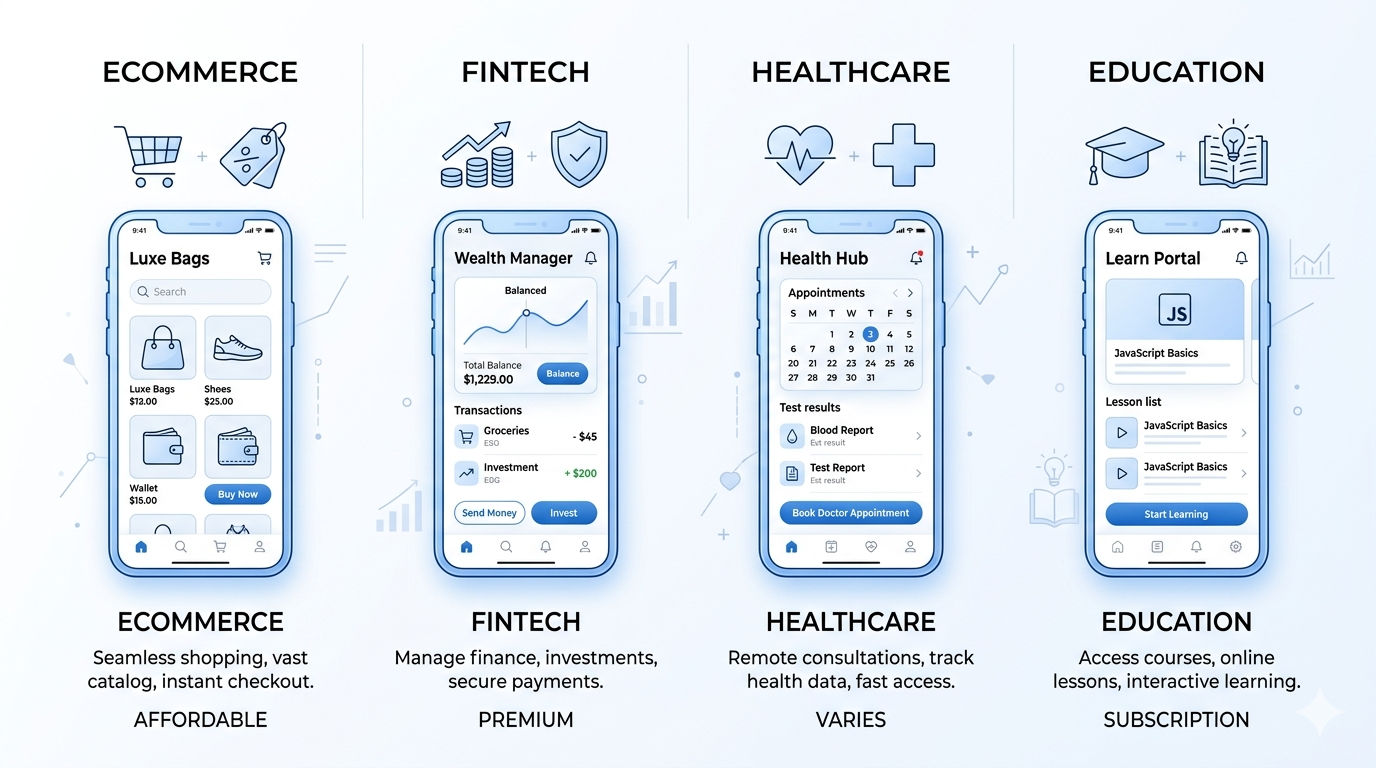
Generic estimates do not help decision-making. The mobile app development cost in India varies heavily by industry because each category demands different features, compliance levels, and scalability. Below is a realistic, industry-wise pricing breakdown based on actual build requirements in 2026.
1. E-commerce App Development Cost in India
Cost Range: ₹5,00,000 – ₹25,00,000+
Timeline: 3–9 months
Core Features:
- Product catalog & search
- User accounts & wishlist
- Payment gateway integration
- Order tracking & notifications
- Admin dashboard
Cost Drivers:
- Inventory size
- Payment integrations
- Multi-vendor functionality
Execution Insight: Start with a single-vendor MVP. Multi-vendor marketplaces increase cost by 2–3x due to complexity.
2. On-Demand App Development (Uber/Swiggy-like)
Cost Range: ₹10,00,000 – ₹50,00,000+
Timeline: 4–12 months
Core Features:
- Real-time tracking (GPS)
- User & provider apps
- Booking system
- Payment integration
- Notifications
Cost Drivers:
- Real-time architecture
- Multiple user roles (customer, vendor, admin)
- Scalability
On-demand apps are among the most expensive categories due to real-time data processing and backend complexity.
3. Healthcare App Development Cost
Cost Range: ₹8,00,000 – ₹30,00,000+
Timeline: 4–10 months
Core Features:
- Appointment booking
- Telemedicine (video calls)
- EHR/medical records
- Payment & prescriptions
Cost Drivers:
- Data security
- Compliance requirements
- Video integration
Security and compliance are non-negotiable, cutting cost here creates legal and reputational risks.
4. Fintech App Development Cost
Cost Range: ₹15,00,000 – ₹60,00,000+
Timeline: 6–12+ months
Core Features:
- Secure authentication (OTP, biometrics)
- Payment processing
- Wallet systems
- Transaction history
- Fraud detection
Cost Drivers:
- High-level encryption
- Regulatory compliance
- Banking APIs
Fintech apps demand premium engineering quality. Cheap development here leads to catastrophic failures.
5. EdTech App Development Cost
Cost Range: ₹5,00,000 – ₹20,00,000+
Timeline: 3–8 months
Core Features:
- Video streaming
- Course management
- Student dashboards
- Live classes
- Quizzes & assessments
Cost Drivers:
- Video infrastructure
- Scalability for concurrent users
- Content management system
Start with recorded content + basic LMS. Live classes and AI features can be added later.
6. Social Media / Community App Cost
Cost Range: ₹10,00,000 – ₹40,00,000+
Timeline: 5–10 months
Core Features:
- User profiles
- Feed & content sharing
- Messaging/chat
- Notifications
- Media uploads
Cost Drivers:
- Real-time updates
- Content moderation
- High server load
These apps are deceptively complex. Scaling infrastructure is the biggest cost factor.
7. Enterprise / Business Automation Apps
Cost Range: ₹8,00,000 – ₹35,00,000+
Timeline: 4–10 months
Core Features:
- CRM/ERP integrations
- Workflow automation
- Analytics dashboards
- Role-based access
Cost Drivers:
- Custom workflows
- Integration with existing systems
- Data handling complexity
Enterprise apps are less UI-heavy but more backend-intensive, cost is driven by logic, not design.
Industry-wise Cost Comparison Table
| App Type | Cost Range (₹) | Complexity Level | Key Cost Driver |
| E-commerce | ₹5L – ₹25L+ | Medium–High | Catalog + payments |
| On-Demand | ₹10L – ₹50L+ | Very High | Real-time tracking |
| Healthcare | ₹8L – ₹30L+ | High | Security + compliance |
| Fintech | ₹15L – ₹60L+ | Very High | Encryption + APIs |
| EdTech | ₹5L – ₹20L+ | Medium | Video + LMS |
| Social Media | ₹10L – ₹40L+ | Very High | Scalability |
| Enterprise | ₹8L – ₹35L+ | High | Integrations |
Cost Optimization Strategy by Industry
- E-commerce: Start niche → expand features later
- On-Demand: Launch in one city first
- Healthcare/Fintech: Never compromise on security
- EdTech: Validate demand before scaling content
- Social Apps: Focus on retention features, not just UI
- Enterprise Apps: Automate high-impact workflows first
Android vs iOS App Development Cost in India
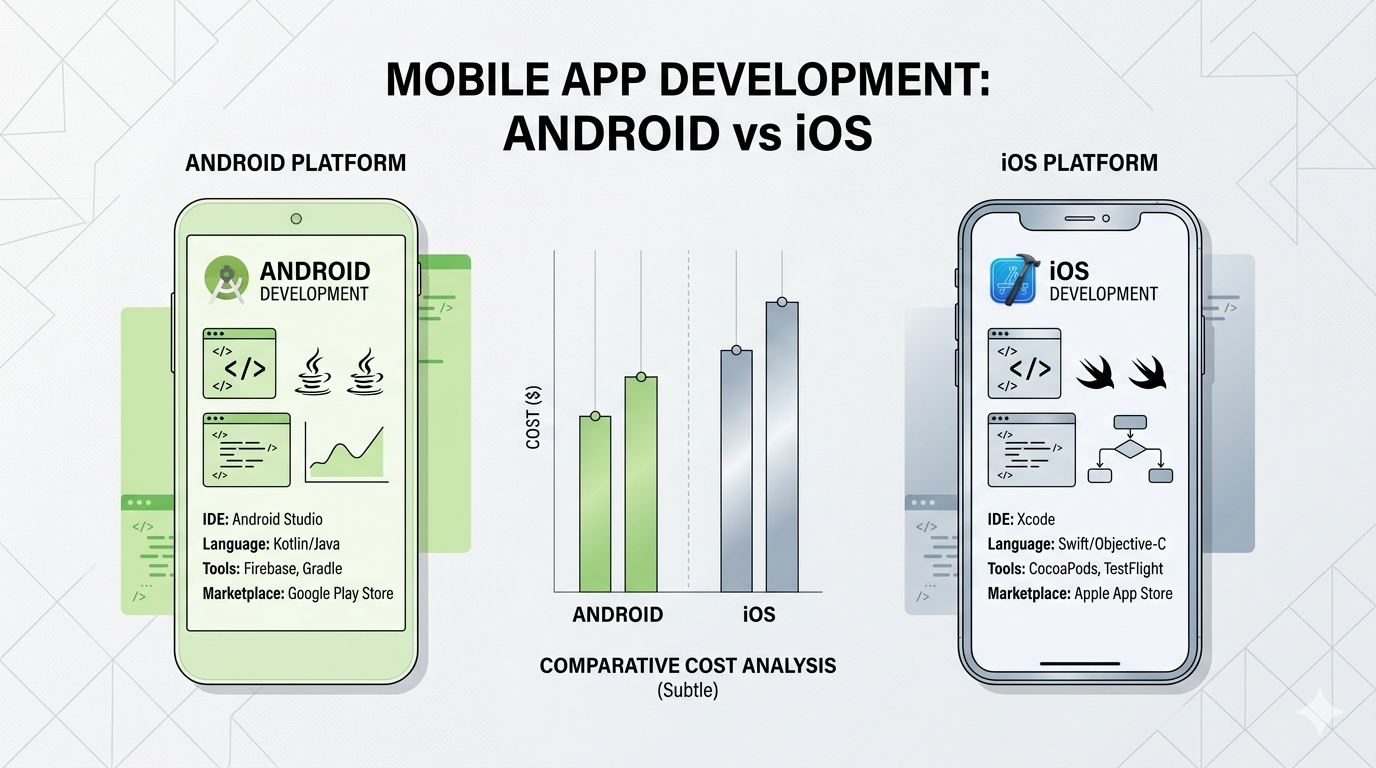
Platform choice directly impacts your mobile app development cost in India, not just initial build cost, but long-term ROI, scalability, and user acquisition efficiency. Most businesses choose wrong here and burn budget early.
Android App Development Cost in India
Cost Range: ₹2,00,000 – ₹20,00,000+
Timeline: 2–6 months
Best For:
- India-first audience
- Mass-market products
- Budget-conscious startups
Cost Drivers:
- Device fragmentation (multiple screen sizes, OS versions)
- Extensive testing requirements
- Wider compatibility
Reality:
- Development cost is moderate
- Testing cost is higher due to device diversity
- Best reach for Indian market (80%+ Android users)
iOS App Development Cost in India
Cost Range: ₹3,00,000 – ₹25,00,000+
Timeline: 2–6 months
Best For:
- Premium audience
- Global markets (US, UK, UAE)
- High-paying users
Cost Drivers:
- Apple design guidelines (strict UI/UX standards)
- App Store approval process
- Developer expertise (Swift ecosystem)
Reality:
- Slightly higher development cost
- Lower testing complexity (limited devices)
- Higher monetization potential per user
Cross-Platform App Development Cost (Flutter / React Native)
Cost Range: ₹3,00,000 – ₹18,00,000+
Timeline: 2–5 months
Best For:
- Startups launching MVP
- Businesses targeting both Android + iOS
- Faster go-to-market
Cost Advantage:
- 30–40% lower cost vs separate native apps
- Single codebase → lower maintenance cost
Limitations:
- Performance limitations in heavy apps (gaming, real-time systems)
- Some native features require additional work
For 80% of business apps, cross-platform delivers maximum ROI with minimum investment.
Native vs Cross-Platform Cost Comparison
| Approach | Cost (₹) | Time | Performance | Best Use Case |
| Android Only | ₹2L – ₹20L | Medium | Good | India-focused apps |
| iOS Only | ₹3L – ₹25L | Medium | Excellent | Premium/global users |
| Cross Platform | ₹3L – ₹18L | Fast | Good | MVPs, startups |
| Native (Both) | ₹8L – ₹40L+ | Slow | Best | High-scale products |
Which Option Saves the Most Money in Mobile App Development
- Early-stage / MVP:
→ Cross-platform (fastest + cheapest validation)
- India-focused business:
→ Android first, then scale
- High-ticket / premium users:
→ iOS priority
- Scalable startup / funded company:
→ Start cross-platform → move to native when needed
Hidden Cost Differences Most Businesses Ignore
- Android requires more QA testing budget
- iOS has higher App Store compliance risk (delays)
- Cross-platform reduces development cost but may increase optimization cost later
- Native apps increase initial cost but reduce long-term technical debt
Cost Optimization Strategy (Platform Level)
- Do not build for both platforms on day one unless necessary
- Validate product-market fit first
- Use cross-platform to test → invest in native after traction
- Choose platform based on revenue potential, not popularity
Hidden Costs in Mobile App Development
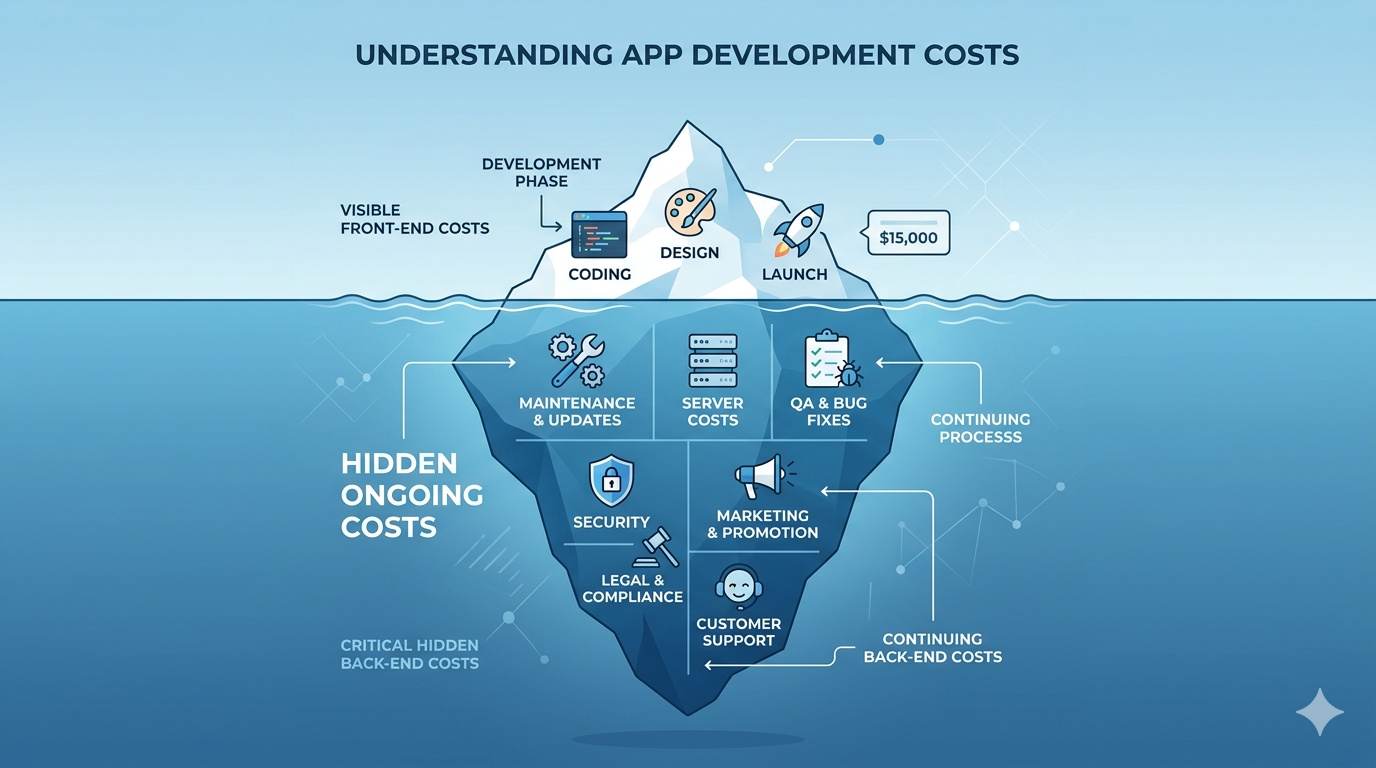
Most businesses underestimate the mobile app development cost in India because they only calculate the initial build. The real financial drain comes from hidden and recurring costs that directly impact profitability. Ignoring these will inflate your budget by 30–70% post-launch.
1. App Maintenance & Updates
Annual Cost: 15–25% of initial development cost
What’s Included:
- Bug fixes
- OS updates (Android/iOS changes)
- Performance optimization
- Minor feature upgrades
Apps degrade fast without updates. Even a stable app requires continuous maintenance to stay functional and competitive.
2. Server & Hosting Infrastructure
Cost Range: ₹2,000 – ₹2,00,000+/month
Depends On:
- Number of users
- Data storage
- Real-time features
- Media content (videos, images)
Examples:
- MVP app → ₹2K–₹10K/month
- Scaled app → ₹50K+/month
Critical Insight:
As your user base grows, server cost scales aggressively. Poor backend planning leads to sudden cost spikes.
3. Third-Party API Costs
Most modern apps rely on external services:
- Payment gateways (transaction fees)
- SMS/OTP services
- Maps & location services
- Email & notification tools
- Analytics platforms
Cost Impact:
- Initial integration: ₹10K – ₹2L
- Ongoing: Usage-based pricing
Businesses budget for integration, but ignore recurring API usage fees, which directly cut margins.
4. App Store & Platform Fees
- Apple App Store: ~₹8,500/year
- Google Play Store: ~₹2,000 one-time
- In-app purchases: 15–30% commission
If your revenue model depends on in-app purchases, platform commissions significantly reduce profit margins.
5. Security & Compliance Costs
Cost Range: ₹50,000 – ₹5,00,000+
Required For:
- Fintech apps
- Healthcare apps
- Apps handling sensitive user data
Includes:
- Data encryption
- Secure authentication
- Compliance (GDPR, HIPAA-like standards)
Cutting cost here is not “saving money,” it’s creating legal and financial risk.
6. UI/UX Rework Costs
Cost Impact: ₹50,000 – ₹3,00,000+ (avoidable)
Why It Happens:
- Poor initial design
- No user testing
- Changing business goals
Redesigning post-launch is far more expensive than getting it right upfront.
7. Scaling & Performance Optimization
Cost Trigger:
- User growth
- High traffic spikes
- Data load increase
Cost Range: ₹1L – ₹10L+ (over time)
Includes:
- Server upgrades
- Code optimization
- Database restructuring
Apps that go viral often crash, not due to success, but due to poor scalability planning.
8. Marketing & User Acquisition Cost
(Not development, but unavoidable for ROI)
Cost Range: Highly variable
Includes:
- Paid ads (Google, Meta)
- Influencer marketing
- ASO (App Store Optimization)
Building an app without allocating marketing budget = zero users. Development is just 50% of the investment.
9. Downtime & Bug Impact Cost (Hidden Loss)
- Revenue loss due to crashes
- Negative app reviews
- User churn
Even a single major bug can reduce retention by 20–40%.
Hidden Cost Summary Table
| Cost Type | Cost Range | Frequency |
| Maintenance | 15–25% annually | Recurring |
| Hosting | ₹2K – ₹2L+/month | Recurring |
| APIs | Usage-based | Recurring |
| App Store Fees | ₹2K – ₹8.5K/year | Recurring |
| Security | ₹50K – ₹5L+ | One-time + updates |
| Scaling | ₹1L – ₹10L+ | Growth phase |
Cost Control Strategy (What Actually Works)
- Budget 20–30% extra upfront for hidden costs
- Choose scalable backend from day one
- Avoid unnecessary third-party dependencies
- Invest in solid UI/UX early → reduce rework
- Plan monetization before development starts
How to Reduce Mobile App Development Cost (Without Compromising Quality)
Cutting budget blindly will destroy product quality. The only way to reduce mobile app development cost in India without hurting performance or scalability is to optimize decisions, not features blindly. Below are execution-level strategies that directly reduce cost while protecting ROI.
1. Start with an MVP (Minimum Viable Product)
Cost Reduction: 40–60% lower initial investment
Execution:
- Identify core problem-solving features only
- Limit to 5–7 essential functionalities
- Launch within 60–90 days
Example:
- Instead of full marketplace → start with single vendor
- Instead of full AI → start with rule-based logic
Most apps fail because they try to build everything upfront. MVP lets you validate demand before scaling cost.
2. Choose Cross-Platform Development
Cost Reduction: 30–40% vs native development
Execution:
- Use Flutter or React Native
- Single codebase for Android + iOS
When to Use:
- MVPs
- Startups
- Standard business apps
Avoid If:
High-performance apps (gaming, heavy real-time processing)
3. Prioritize Features Using ROI Logic
Execution Framework:
- Classify features into:
- Must-have (launch)
- Good-to-have (post-launch)
- Avoid (low ROI)
Cost Impact:
- Eliminating non-essential features reduces cost by 20–50%
Most features added in early-stage apps are never used.
4. Use Pre-Built Solutions & APIs
Cost Reduction: 20–35%
Examples:
- Authentication → Firebase Auth
- Payments → Razorpay/Stripe
- Notifications → OneSignal
Building everything from scratch is expensive and unnecessary unless it’s your core differentiator.
5. Avoid Over-Engineering in Early Stage
Mistake: Building for 1M users when you have 0 users
Execution:
- Start with scalable but lean architecture
- Upgrade infrastructure only when needed
Cost Impact: Saves ₹2L–₹10L+ in early stages
6. Choose the Right Development Partner
Execution Options:
- Avoid ultra-cheap freelancers → high rework risk
- Avoid overpriced agencies → low ROI
What to Look For:
- Proven portfolio
- Transparent pricing
- MVP-focused approach
Reality: Wrong partner selection is the #1 reason for budget overruns.
7. Reduce UI/UX Complexity (Strategically)
Execution:
- Use clean, functional design
- Avoid unnecessary animations initially
- Focus on usability, not visual overload
Cost Impact: Saves ₹50K – ₹2L+
Important: Do not compromise on UX clarity—only remove visual excess.
8. Plan Backend Scalability Smartly
Execution:
- Start with cloud-based solutions (Firebase, AWS Lite)
- Scale infrastructure based on user growth
Cost Impact: Reduces early backend cost by 30–50%
9. Agile Development Approach
Execution:
- Break project into small sprints (2–3 weeks)
- Review progress continuously
- Adjust features based on feedback
Cost Benefit:
- Reduces rework
- Improves efficiency
- Prevents scope creep
10. Outsource Smartly (India Advantage)
Execution:
- Leverage Indian agencies for cost efficiency
- Maintain clear communication & milestones
Cost Benefit: Save 60–70% vs US/UK development cost
11. Post-Launch Cost Optimization
Execution:
- Monitor analytics → remove unused features
- Optimize server usage
- Reduce third-party API dependency over time
Impact: Improves long-term profitability
Cost Reduction Summary Table
| Strategy | Cost Saving Potential |
| MVP Approach | 40–60% |
| Cross-Platform | 30–40% |
| Feature Prioritization | 20–50% |
| Pre-built APIs | 20–35% |
| Smart Backend Planning | 30–50% |
What NOT to Do in Mobile App Development
- Cutting QA/testing budget
- Hiring cheapest developers
- Ignoring scalability completely
- Building full product before validation
- Overloading app with features
Freelancer vs Agency vs In-House Development Cost
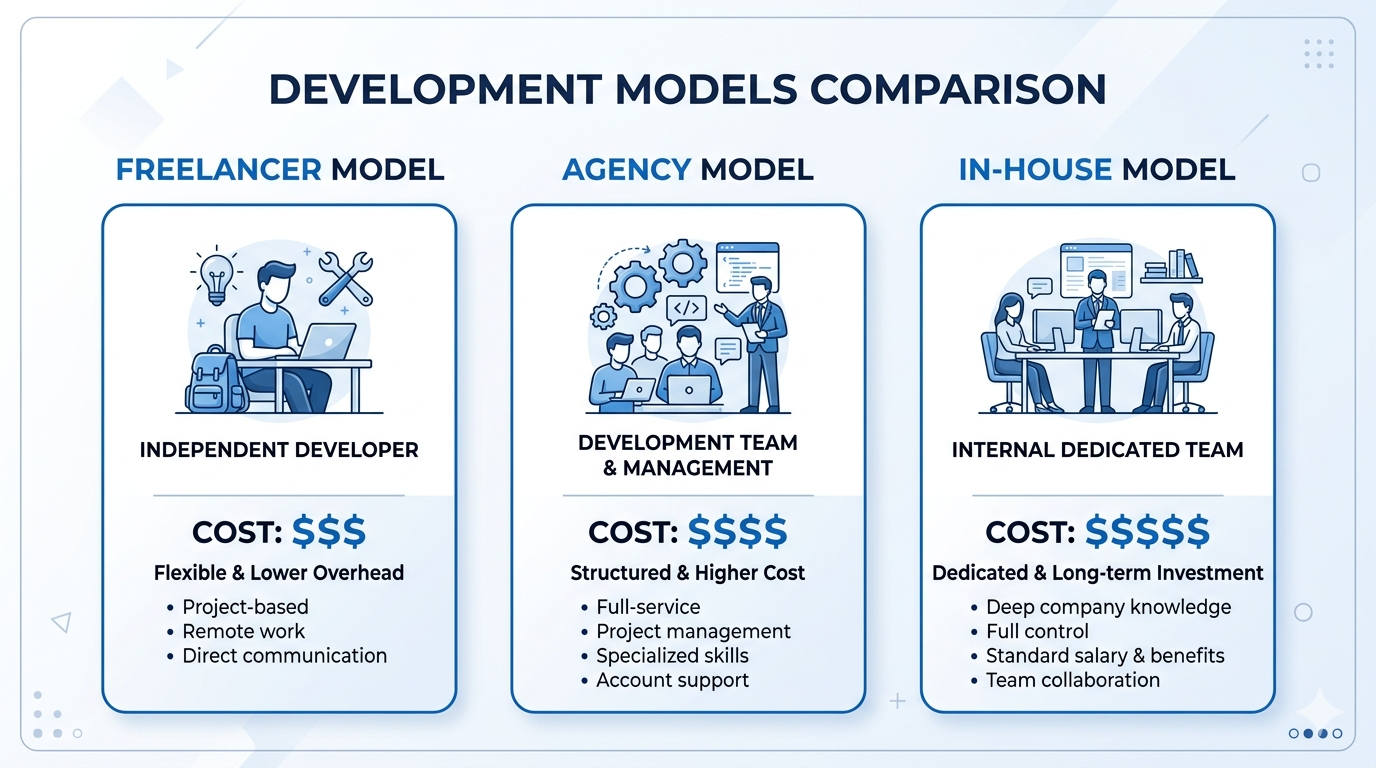
Choosing the wrong development model is where most businesses lose money, not in features or tech. Your execution partner directly impacts cost, speed, quality, and long-term scalability.
1. Freelancer Development Cost
Cost Range: ₹500 – ₹2,000/hour
Project Cost: ₹50,000 – ₹5,00,000+
Best For:
- Very small projects
- Basic MVPs with limited features
- Tight budgets
- Advantages:
- Lowest upfront cost
- Flexible hiring
Risks (Major):
- No structured process
- Limited scalability
- Dependency on one person
- High chance of delays or abandonment
Hidden Cost Reality: Cheap freelancers often lead to rework, missed deadlines, and poor code quality, increasing total cost by 2–3x later.
2. Agency Development Cost
Cost Range: ₹800 – ₹3,500/hour
Project Cost: ₹3,00,000 – ₹50,00,000+
Best For:
- Startups
- SMEs
- Businesses building scalable apps
Advantages:
- Structured development process
- Dedicated team (design, dev, QA)
- Faster delivery timelines
- Better project management
Risks:
- Higher upfront cost than freelancers
- Quality varies across agencies
Execution Insight: A good agency reduces risk, speeds up delivery, and ensures scalability, making it the highest ROI option for most businesses.
3. In-House Development Cost
Monthly Cost (India):
- Developer: ₹40,000 – ₹1,50,000/month
- UI/UX Designer: ₹30,000 – ₹1,00,000/month
- Project Manager: ₹50,000 – ₹2,00,000/month
- Total Monthly Team Cost: ₹2L – ₹10L+
- Annual Cost: ₹25L – ₹1Cr+
Best For:
- Large enterprises
- Long-term product companies
- Continuous development needs
Advantages:
- Full control over team
- Long-term consistency
- Deep product understanding
Risks:
- Extremely high cost
- Hiring & retention challenges
- Slower initial setup
Reality: In-house teams make sense only when you have ongoing development at scale. For most businesses, this is overkill.
Freelancer vs Agency vs In-House: Cost Comparison
| Model | Cost | Speed | Quality | Scalability | Risk Level |
| Freelancer | Low | Slow–Unpredictable | Low–Medium | Low | High |
| Agency | Medium | Fast | High | High | Low |
| In-House | Very High | Medium | High | Very High | Medium |
What Actually Drives Cost Differences
- Team Size: Agencies deploy multiple specialists vs single freelancer
- Process: Agencies follow structured workflows → fewer errors
- Accountability: Agencies provide contracts, timelines, SLAs
- Scalability: In-house teams scale better long-term but cost more
Conclusion : What Your App Will Really Cost
Mobile app development cost in India is not a fixed number, it’s a strategic decision. The difference between a ₹3L app and a ₹30L app isn’t just features; it’s how intelligently the product is planned, built, and scaled.
What actually matters:
- Cost is driven by complexity, features, platform, and execution partner
- Most businesses overspend due to overbuilding and poor planning
- The highest ROI comes from lean MVP → validation → structured scaling
Clear Takeaways for Decision Makers
Building a successful mobile application is not about spending the highest budget. It is about making the right investment at the right stage of your product journey. Companies that validate their idea early, prioritize essential features, and work with an experienced development partner consistently achieve better ROI than businesses that try to build everything at once.
Start small and scale fast. Instead of investing ₹20 lakh or more on a feature-heavy application from day one, launch a Minimum Viable Product (MVP) within a budget of approximately ₹3 lakh to ₹5 lakh. An MVP allows you to test market demand, collect real user feedback, identify what customers actually need, and improve the product before committing to a larger investment. This approach minimizes financial risk while significantly increasing your chances of building a product that users genuinely want.
Choose the right development approach based on business goals. Cross-platform technologies such as Flutter or React Native are ideal for startups and businesses looking for faster development, lower costs, and quicker market entry. However, if your application requires intensive graphics, advanced hardware integration, or platform-specific capabilities, native Android or iOS development may provide better long-term performance. The right choice should always be driven by business objectives, expected ROI, and technical requirements rather than trends.
Focus on essential features instead of unnecessary complexity. Every additional feature increases development time, testing effort, maintenance costs, and future upgrades. Prioritize the features that directly solve your users’ problems or generate revenue. Features such as user authentication, payments, notifications, analytics, and a clean user experience usually provide far greater value than dozens of rarely used functionalities. You can always expand the product once you have validated demand.
Prepare for costs beyond development. Many businesses underestimate the ongoing expenses of running a mobile application. Maintenance, cloud infrastructure, third party APIs, security updates, bug fixes, app store compliance, marketing, and future feature enhancements all require continuous investment. A practical approach is to allocate an additional 20% to 30% of your initial development budget for post-launch operations. Planning these expenses early prevents financial surprises and ensures long-term product stability.
Select your development partner carefully. The cheapest development quote often becomes the most expensive decision. An inexperienced team may deliver poor code quality, miss deadlines, create security issues, or require costly redevelopment later. An experienced development company can recommend the right technology stack, optimize development timelines, avoid common mistakes, and build a scalable architecture that supports future growth. The right partner not only develops your application but also helps you make smarter business and technical decisions throughout the product lifecycle.
Ultimately, your objective should not be to build the cheapest mobile application. It should be to build the most cost-efficient, scalable, and revenue-generating product that aligns with your business goals. A well-planned investment, combined with a clear product strategy and the right technology partner, can significantly reduce development risks while maximizing long-term returns. Businesses that focus on value instead of simply minimizing costs are far more likely to launch successful apps that attract users, generate revenue, and scale sustainably.







%20(1)%201.webp?updatedAt=1725274383969)